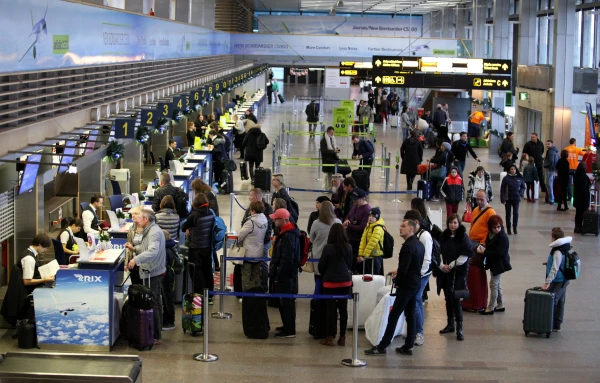
As of October 12, 2025, Latvia has started implementing the new Entry/Exit System (EES) — part of the European Union’s large-scale initiative to digitalize border management and strengthen travel security within the Schengen Area. The system is based on EU Regulation No. 2017/2226, and its introduction is already affecting border crossing procedures, including at Riga International Airport, where passengers have reported longer queues at passport control.
What Is EES and Why It Matters
The new system is designed to register data of all third-country nationals crossing the external borders of the Schengen Area. Previously, passports were stamped manually upon entry and exit; now, all data is recorded digitally, allowing authorities to:
- increase border security and control;
- reduce visa overstays and misuse of travel documents;
- speed up checks for repeat travelers;
- facilitate data exchange between EU and Schengen countries.
The system records the following:
- date and place of entry or exit;
- travel document category;
- biometric data (fingerprints and facial image);
- visa or residence permit details.
All information is stored in a centralized EU database, accessible to border guards across member states.
Who Are Considered Third-Country Nationals
Third-country nationals are individuals who are not citizens of the EU, EEA, or Switzerland, and who do not hold a residence permit in any Schengen Area country. For such travelers, the introduction of the EES means that, during their first entry after October 12, 2025, they must undergo an additional registration procedure.
A border guard will collect fingerprints and a facial image and verify them against the traveler’s passport. These details will be stored in the system, and for future crossings, only identity verification (biometric comparison) will be required — a faster process.
Impact on Passengers
According to Latvia’s State Border Guard, longer waiting times and queues are expected during the initial rollout of the EES. The main reasons include:
- biometric data registration takes longer than a simple passport check;
- some equipment is still being tested;
- border officers must strictly follow new EU procedures.
Therefore, all passengers — especially third-country nationals — are advised to:
- Arrive at the airport at least three hours before departure;
- Bring a valid passport, not an ID card (ID cards are not compatible with automated gates);
- Follow the instructions of airport and border staff, and avoid attempting to bypass control procedures.
Even EU citizens traveling outside the Schengen Area (for example, to the UK, Turkey, the USA, or the UAE) may experience longer checks due to the new system.
How to Speed Up Border Control
To reduce waiting times, Riga International Airport recommends using automated border control gates (ABC gates). These can be used by:
- citizens of the EU, EEA, and Switzerland with biometric passports;
- travelers aged 14 and above when entering;
- travelers aged 18 and above when leaving.
The process is fully automated: insert your passport and follow on-screen instructions. ID cards cannot be used. If the system cannot recognize the traveler, a manual check by a border officer is required. Passports should be in good condition, and faces should remain visible for accurate identification.
Impact on Employers and Companies
For employers who hire third-country nationals, the introduction of the EES brings several implications:
- border crossing procedures may take longer for foreign employees;
- business travel and staff rotation planning must account for potential delays;
- companies should inform their foreign workers about the new requirements and recommend arriving at the airport early.
For companies working in migration, HR, or recruitment, the system also offers positive changes. The EES ensures greater transparency of stay duration, helps prevent visa overstays, and simplifies verification of legal residence status.
How Long Will the Transition Period Last
According to the EU’s implementation plan, the system will be introduced gradually. Until April 10, 2026, border guards will continue using both passport stamps and digital registration in the EES. After that date, the new system will completely replace the previous manual process.
This means that for several months, the process will remain mixed — part digital, part manual — requiring patience and understanding from travelers.
Why This Matters in the Long Term
The EES is part of the EU’s broader “Smart Borders” initiative, aimed at making borders more efficient, secure, and technologically advanced.
In the future, the system will help:
- reduce illegal border crossings;
- prevent misuse of visas and forged documents;
- improve flight safety and passenger verification;
- establish a unified EU-wide border data system.
The EES will also be integrated with ETIAS — the European Travel Information and Authorisation System — which will take effect in 2026. This will allow visa-free travelers to register online before their trip, further enhancing border security and efficiency.
Starting in 2025, border crossing becomes digital — safer, but also stricter.
Role of HR Line EU
The introduction of the new Entry/Exit System (EES) marks not only a technological change but also a new stage in migration regulation across Latvia and the European Union. In this evolving environment, it is crucial to understand how to act correctly when crossing borders, submitting documents, or changing residence status.
HR Line EU is a European company specializing in visa and migration consulting, as well as assisting clients in complex and non-standard legal situations related to residence and immigration in Latvia.
We help our clients:
- understand the new rules of entry and residence for third-country nationals;
- apply for short-term and long-term visas, obtain or renew residence permits;
- verify data accuracy in cases of errors or system issues in the new IIS/EES database;
- prepare appeals and provide consultations regarding the protection of foreign nationals’ rights.
In addition, HR Line EU offers legal support to refugees and individuals subject to deportation decisions. We analyze each case, explain possible legal actions, prepare official submissions and appeals, and ensure communication with migration and judicial authorities.Our mission is to guarantee every client lawful protection, legal stability, and respect for their rights in Latvia and across the European Union.