

- Start Date: November 3
- Training Format: live broadcasts in ZOOM
- Duration: 1.5 months
- Price: 390,00 €
- Language of Instruction: Russian
Classic HR through the lens of AI
Dive into modern recruiting, where traditional HR practices seamlessly integrate with the capabilities of artificial intelligence (AI). This course is designed for HR professionals, recruiters, and managers who aim to enhance hiring efficiency through digital tools and automation.
The course consists of 15 sessions covering the full recruitment cycle — from planning to performance evaluation. It does more than just introduce AI — it shows how to integrate it into everyday HR practice to make better-informed decisions, save time, and improve work quality.
Program
-
01
Recruiting
+Session 1. AI-powered candidate planning and search: the role of the recruiter in the HR cycle, the recruitment funnel, personnel planning, recruitment applications and job profiles, types of recruitment, acquisition channels, job posting writing, digital and AI tools for search.
Session 2. AI-powered screening and interviews: analyzing resumes and candidate responses, preliminary screening through online formats and chatbots, automated competency assessment and asynchronous communication, interview methods, group interviews for mass recruitment, creating scenarios and questions using AI.
Session 3. AI-powered assessment, decision making, and recruitment KPIs: candidate assessment methods, formulating tasks and interpreting results, comparing profiles and preparing reports for managers, collaborative decision making and data visualization, preparing job offers and correctly formulating refusals, key recruiting KPIs and their automation. -
02
Adaptation
+Session 4. AI-powered onboarding and adaptation: the difference between onboarding and adaptation, key stages of employee onboarding (first day, week, month, 90 days), organizing mentoring and feedback, using welcome packs and corporate culture tools, onboarding chatbots and digital assistants, evaluating the effectiveness of onboarding.
-
03
Training and development
+Session 5. From Disjointed Training to a Comprehensive AI-Powered Personnel Development Ecosystem
Key Transformation: Shifting from an “on-demand” training model to a personalized, continuous, and predictive development system, where AI acts as an intelligent assistant and navigator, not a replacement for HR experts. We will create an adaptive development ecosystem capable of forecasting skill needs based on business strategy and market trends, personalizing learning paths for each employee, and measuring the direct impact of training on business results. We will integrate data from LMS, HRIS, performance management systems, assessment tools, and operational business systems (such as CRM and Jira) into a single system. We will provide HR and management with interactive dashboards with real-time data on progress in closing key skill gaps across the company, on at-risk employees (whose competencies are becoming obsolete), and on the effectiveness of investments in each training area. -
04
Talent management and assessment
+Session 6. Talent Identification: From Intuition to Data. We’ll explore an approach to creating a predictive, personalized, and scalable system through testing and training AI. We will address the following challenges: identifying high-potential employees (HiPos) based on an analysis of their digital footprint; reducing the influence of subjective judgments by obtaining objective assessments using AI algorithms that analyze cognitive patterns rather than results—including decision-making speed, risk propensity, and the ability to learn from mistakes.
Session 7. Career tracks and employee development trajectories are a strategic tool that demonstrates value and investment to employees. They are the answer to the question every employee at any company asks, “Why should I stay here for the long haul?”
We’ll examine key career path types and create a flexible career lattice (Career Lattice); conduct an inventory of roles and required competencies; visualize them in an interactive library using LMS platforms, Miro, Tilda, and other tools; integrate career paths into Performance Review, 360° assessment, individual development (IDP), and incentive systems; and evaluate the effectiveness of implementation through relevant KPIs. -
05
HR-BREND
+Session 8. HR BRANDING: From Theory to Practice. 2025/2026 GLOBAL HR TRENDS.
We’ll develop an EVP – an employer value proposition. We’ll build a candidate empathy map and learn how to work with the target audience. Wellbeing. Tone of voice. We’ll explore which research and employee surveys help create/shape the value of a company’s internal HR brand. HR-zero: taking HR management to a new level through complete process optimization and automation. -
06
Corporate culture
+Session 9. AI-based corporate culture: typologies and diagnostics of corporate culture, company mission, values, and norms, business etiquette and internal communications, tools for communicating culture, creating HR products and events, measuring changes and effectiveness of corporate culture.
-
07
Staff motivation
+Session 10. Motivation Theory. The foundations of motivation in Maslow’s pyramid. Classification of motivation and their types. What holds us stronger – money or social rewards?
Session 11. Material and non-material motivation. Motivation tools. Practical application of tools in different areas. Pros and cons of each tool. Can motivation be harmful?! Personnel and their motivation: is it an expense or an investment in financial terms? LEAN philosophy as a motivation system: is it applicable in Belarus? Equality and inclusion as part of non-material motivation in LEAN.
Session 12. Remuneration forms and systems. Components of wages. Pros and cons of each form for both parties – employer and employee.
Session 13. KPIs – a system that can motivate, not demotivate. KPI indicators and creating a motivation system for different levels. Internal assessment – as a system of motivation and the ability to change the company for the better. Examples of actually implemented motivations. -
08
HR analytics
+Session 14. The difference between analytics and metrics. 50 most popular HR metrics, their calculation and application. 5 tools for collecting information for analytics.
Session 15. The difference between data validity and reliability. Digitizing HR solutions for analysis. Creating various graphs. Segmenting data by different areas. Calculating the company’s benefits from increasing employee engagement. Implementing Exit Interviews for turnover analysis.

Veranika Khlud
Owner of the European recruitment agency “HR Line EU” and a PhD student in economics. A practicing specialist in HR management, recruitment, and labor law with over 10 years of experience.
PhD candidate in economics
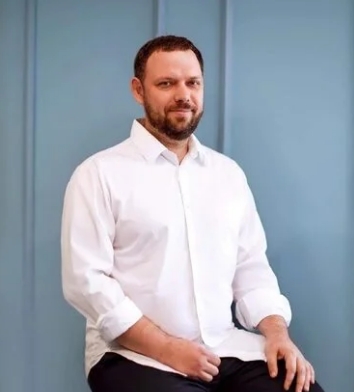
Nikita Karpuk
Business consultant and trainer specializing in HR development and the implementation of modern IT solutions for businesses.
Over 14 years in HR, 5 years in consulting.

Sergey Moiseenok
Founder of the online money exchange CashMarket.by
CFO of Advy.ai
7 years in the Belarusian banking sector

Laura Uncutsa
Director of the I-teco Center of Expertise for 4 years, a leading systems integrator in Russia.
Over 20 years of HR experience, 15 of which in senior positions.
Experience in developing and building customer service, creating and implementing innovative HR strategies.
Development and implementation of employee experience management systems to create customer-centric teams and companies.
Six years in the banking sector of the Republic of Belarus.

